
When you shrink materials down to the nanoscale, their properties can change dramatically because particle size directly impacts surface area, electronic behavior, and mechanical strength. You might expect smaller always means better performance, but the reality is more nuanced nanoparticle size measurement. Understanding exactly how size influences reactivity, optics, and thermal traits can help you design materials tailored for specific needs. The complexity behind these effects is what makes this topic so intriguing.
How Particle Size Changes Nanomaterial Surface Area and Reactivity
When you shrink particles down to the nanoscale, their surface area increases dramatically compared to their volume. This change means you get more surface atoms exposed, which makes the material way more reactive. Imagine having more open doors for chemical reactions to happen—you’re unlocking new possibilities for catalysis, sensing, or energy storage.
With larger particles, most atoms hide inside, limiting interaction. But at the nanoscale, almost every atom can interact with the environment, giving you control over how the material behaves Lab Alliance. This boost in surface area frees you from the limits of bulk materials, letting you tailor reactivity and performance for your needs.
Embracing nanoscale particles means you’re stepping into a world where size equals power and potential.
Why Smaller Particles Affect Optical and Electronic Properties
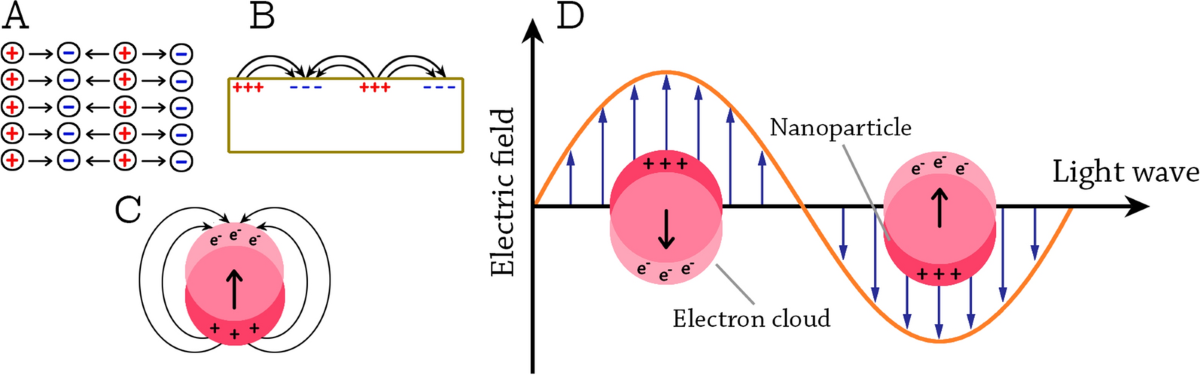
Because shrinking particles to the nanoscale changes how electrons behave, you’ll see dramatic shifts in a material’s optical and electronic properties. At this tiny scale, electrons are confined, altering energy levels and creating unique quantum effects.
You’ll notice colors shifting because smaller particles absorb and emit light differently, letting you tailor materials for specific optical uses like LEDs or sensors. Electrically, smaller particles can change conductivity and charge transport, giving you control over how materials perform in devices.
This means you’re not just working with the same old bulk properties; you’re unlocking new behaviors that open doors to innovation. By understanding and harnessing these size-dependent changes, you gain freedom to design nanomaterials that meet your exact needs in technology and beyond.
How Particle Size Influences Mechanical Strength and Flexibility
Beyond optical and electronic shifts, particle size also plays a key role in determining a material’s mechanical strength and flexibility. When particles shrink to the nanoscale, their surface area increases dramatically, directly impacting how the material responds to stress. You’ll notice that smaller particles often enhance strength but can also introduce new flexibility features.
Consider these effects of particle size on mechanical properties:
- Smaller particles can block dislocation movement, boosting strength
- Increased surface atoms lead to altered bonding and flexibility
- Nano-sized grains reduce crack propagation, improving toughness
- Particle size affects stiffness by changing grain boundary behavior
- Flexibility can increase as size decreases due to surface atom dynamics
Understanding this helps you leverage nanomaterials for designs that demand both strength and freedom of movement.
What Role Size Plays in Nanomaterial Thermal Behavior
As particle size shrinks to the nanoscale, you’ll find that thermal behavior changes significantly due to increased surface area and altered atomic interactions.
Smaller particles have more atoms exposed on their surface, which affects how heat is absorbed, transferred, and dissipated.
You’ll notice that nanomaterials often exhibit lower melting points compared to their bulk counterparts because surface atoms require less energy to move.
Additionally, thermal conductivity can either increase or decrease depending on size and structure, giving you control over heat flow in applications.
This shift in thermal properties means you can harness nanomaterials for more efficient thermal management in electronics, energy devices, or coatings.
Understanding how size influences heat behavior empowers you to push boundaries without being confined to traditional material limits.
How Controlling Particle Size Tailors Nanomaterial Performance
Harnessing control over particle size lets you fine-tune nanomaterial performance to meet specific needs. By adjusting size, you unlock unique properties that larger particles just can’t offer.
This freedom empowers you to design materials with precision, enhancing functionality across applications. Here’s how controlling particle size tailors performance:
- Improves catalytic activity by increasing surface area
- Enhances electrical conductivity for better device efficiency
- Modifies optical properties to create vivid colors or transparency
- Controls mechanical strength for tougher or more flexible materials
- Regulates thermal behavior, optimizing heat resistance or transfer
You’re not just working with particles—you’re shaping possibilities. Using size as your tool, you gain the flexibility to innovate and adapt nanomaterials exactly how you want, unlocking new potentials and expanding your creative freedom.
Conclusion
You’ve seen how particle size shapes nanomaterial properties in many ways—from boosting surface area and reactivity to tuning optical and electronic behavior. Smaller particles strengthen and flex materials differently, while also changing their thermal traits. By controlling size, you can tailor nanomaterials to fit specific needs, enhancing performance in catalysis, sensing, energy storage, and more. Understanding these effects lets you unlock the full potential of nanomaterials for your applications.


